
Modern cars come with many useful features designed to make driving safer, more comfortable, and more convenient. However, many drivers use only the basic functions of their vehicles and never discover what some buttons, settings, and systems actually do.
Some features can improve visibility, reduce driver fatigue, make parking easier, or provide additional safety in difficult conditions.
The exact features vary between car models, but here are 15 useful features that many drivers may not know how to use properly.
1. Automatic Headlights
Many modern cars have automatic headlights that turn on when the vehicle detects low light.
This feature can be useful when entering:
- Tunnels
- Underground parking
- Dark roads
- Areas with poor visibility
However, drivers should not blindly rely on automatic headlights in every situation. In heavy rain, fog, or dust, manually selecting the appropriate lights may sometimes be necessary depending on the vehicle.
2. Steering Wheel Controls
Steering-wheel buttons are not only for changing music.
Depending on the vehicle, they may allow you to control:
- Audio volume
- Music tracks
- Phone calls
- Cruise control
- Voice commands
- Dashboard information
Using these controls can reduce the need to take your hands away from the steering wheel.
3. Rear-View Mirror’s Night Setting
Many traditional rear-view mirrors have a small tab underneath them.
Moving the tab changes the mirror’s angle and can reduce glare from headlights behind you during nighttime driving.
It is a simple feature, but many drivers never use it.
Some modern vehicles instead use an automatically dimming rear-view mirror.
4. Recirculation Button
The air-conditioning recirculation button is often represented by a car with a circular arrow inside it.
When activated, the system recirculates air already inside the cabin rather than continuously bringing in outside air.
It can be useful when:
- Driving behind smoky vehicles
- Passing through dusty areas
- Cooling the cabin quickly
- Driving through unpleasant odors
However, using recirculation continuously in every situation may not always be ideal. Follow your vehicle’s recommendations and switch to fresh air when appropriate.
5. Cruise Control
Cruise control can maintain a selected speed without requiring constant pressure on the accelerator.
It can be especially useful on suitable highways and long stretches of steady-speed driving.
However, cruise control should not be used carelessly in heavy traffic, slippery conditions, or roads where constant speed changes are necessary.
Always remain fully attentive while using it.
6. Electronic Parking Brake
Many newer vehicles use an electronic parking brake instead of a traditional handbrake lever.
The system may automatically apply or release the parking brake under certain conditions.
Some vehicles also include an automatic-hold function that keeps the car stationary when you stop.
Learn how your particular system works before relying on it.
7. Auto Hold
Auto Hold can be extremely convenient in traffic.
When activated, it can hold the vehicle stationary after you stop, allowing you to remove your foot from the brake pedal in suitable situations.
It can be helpful during:
- Traffic jams
- Traffic lights
- Inclines
- Frequent stop-and-go driving
Not every vehicle operates Auto Hold in exactly the same way, so check the owner’s manual.
8. Tire Pressure Information
Some vehicles can display tire-pressure information directly on the dashboard or infotainment screen.
This allows drivers to identify a low-pressure tire before it becomes a major problem.
Even if your vehicle has a tire-pressure monitoring system, it is still a good idea to physically check tire pressure regularly.
The recommended pressure is usually listed on the vehicle’s information label or in the owner’s manual.
9. Lane Departure Warning
Some modern vehicles can detect lane markings and warn the driver if the car begins moving out of its lane unintentionally.
Depending on the system, the vehicle may provide:
- A dashboard warning
- An audible alert
- Steering-wheel vibration
- Steering assistance
These systems are designed to assist the driver, not replace driver attention.
Always keep your eyes on the road.
10. Blind Spot Monitoring
Blind-spot monitoring uses sensors to detect vehicles in areas that may be difficult to see in the side mirrors.
A warning light may appear in the side mirror when another vehicle is detected.
This can be especially useful on busy highways.
However, blind-spot monitoring should never replace checking mirrors and physically checking the blind spot before changing lanes.
11. Parking Sensors
Parking sensors can help drivers estimate the distance between the vehicle and nearby objects.
They are particularly useful in:
- Tight parking spaces
- Garages
- Crowded parking areas
- Narrow driveways
But sensors can have limitations. They may not detect every object, especially very small, low, or unusual-shaped objects.
Always use your mirrors and look around the vehicle as well.
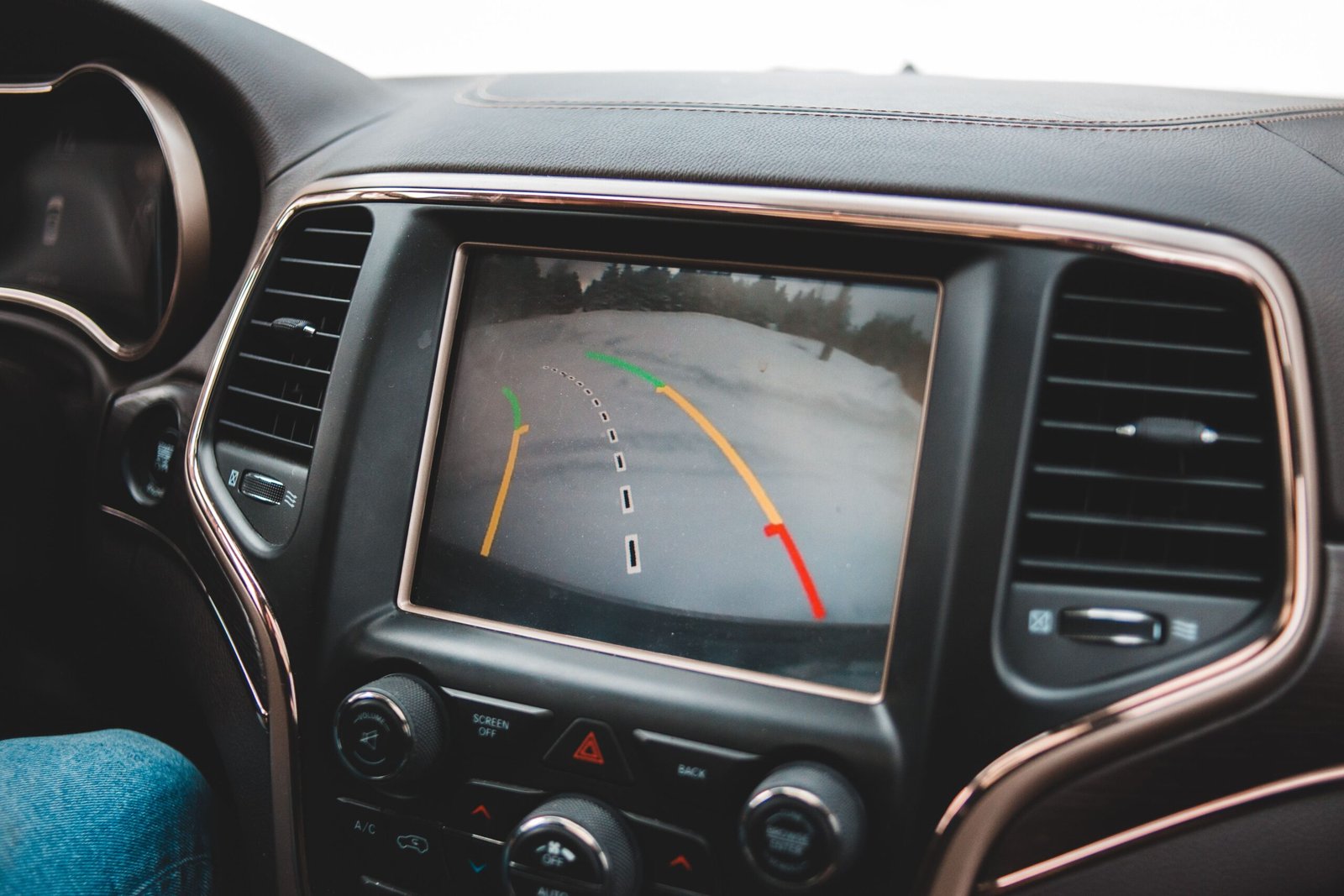
12. Rear Camera Guidelines
A rear camera can make reversing much easier.
Many systems display guidelines showing the predicted path of the vehicle as you turn the steering wheel.
These lines can help with parking alignment.
However, the camera has a limited field of view. Always check the surroundings directly and use your mirrors.
Never rely exclusively on the screen while reversing.
13. Defogging and Defrosting Settings
Many drivers turn the fan up to maximum when the windshield becomes foggy.
A better approach is to use the vehicle’s dedicated windshield defogging or defrosting setting.
Depending on the vehicle, this setting may automatically adjust:
- Air direction
- Fan speed
- Air conditioning
- Temperature
- Outside-air intake
Clearing the windshield quickly is important because visibility should always be your priority.
14. Adjustable Headrests
Headrests are not only designed for comfort.
They are also an important part of the vehicle’s occupant-protection system.
Adjust the headrest so that it properly supports the back of your head.
The correct position depends on the vehicle and occupant, but the goal is to reduce excessive head movement during a collision.
Do not remove or incorrectly position headrests simply because they feel more comfortable.
15. Drive Mode Selection
Some vehicles offer different driving modes such as:
- Eco
- Normal
- Sport
- Snow
- Comfort
- Off-road
These modes can change how the vehicle responds to throttle input, transmission behavior, steering assistance, or other systems.
For example, an Eco mode may prioritize efficiency, while a Sport mode may provide a more responsive driving feel.
The exact behavior depends on the vehicle.
Always understand what each mode changes before using it.
Bonus: Check Your Owner’s Manual
One of the most useful “features” of your car is something many drivers completely ignore: the owner’s manual.
It contains information about:
- Dashboard warning lights
- Recommended fluids
- Tire pressure
- Service intervals
- Driving modes
- Safety systems
- Emergency procedures
- Vehicle-specific controls
Reading the manual for even 20 minutes can teach you things about your car that you may never discover otherwise.
Don’t Assume Every Feature Works the Same Way
A common mistake is assuming that a feature works identically in every vehicle.
For example, cruise control, Auto Hold, lane assistance, parking sensors, and automatic headlights can operate differently between manufacturers and models.
Always check the instructions for your specific vehicle.
Final Thoughts
Modern cars are packed with technology, but having advanced features is only useful if you know how to use them correctly.
Features such as cruise control, automatic headlights, tire-pressure monitoring, blind-spot monitoring, parking sensors, and Auto Hold can make everyday driving easier and safer when used properly.
Take some time to explore your vehicle’s controls and read the owner’s manual. You may discover several useful features that you have been ignoring for years.
The better you understand your car, the better you can use it.