
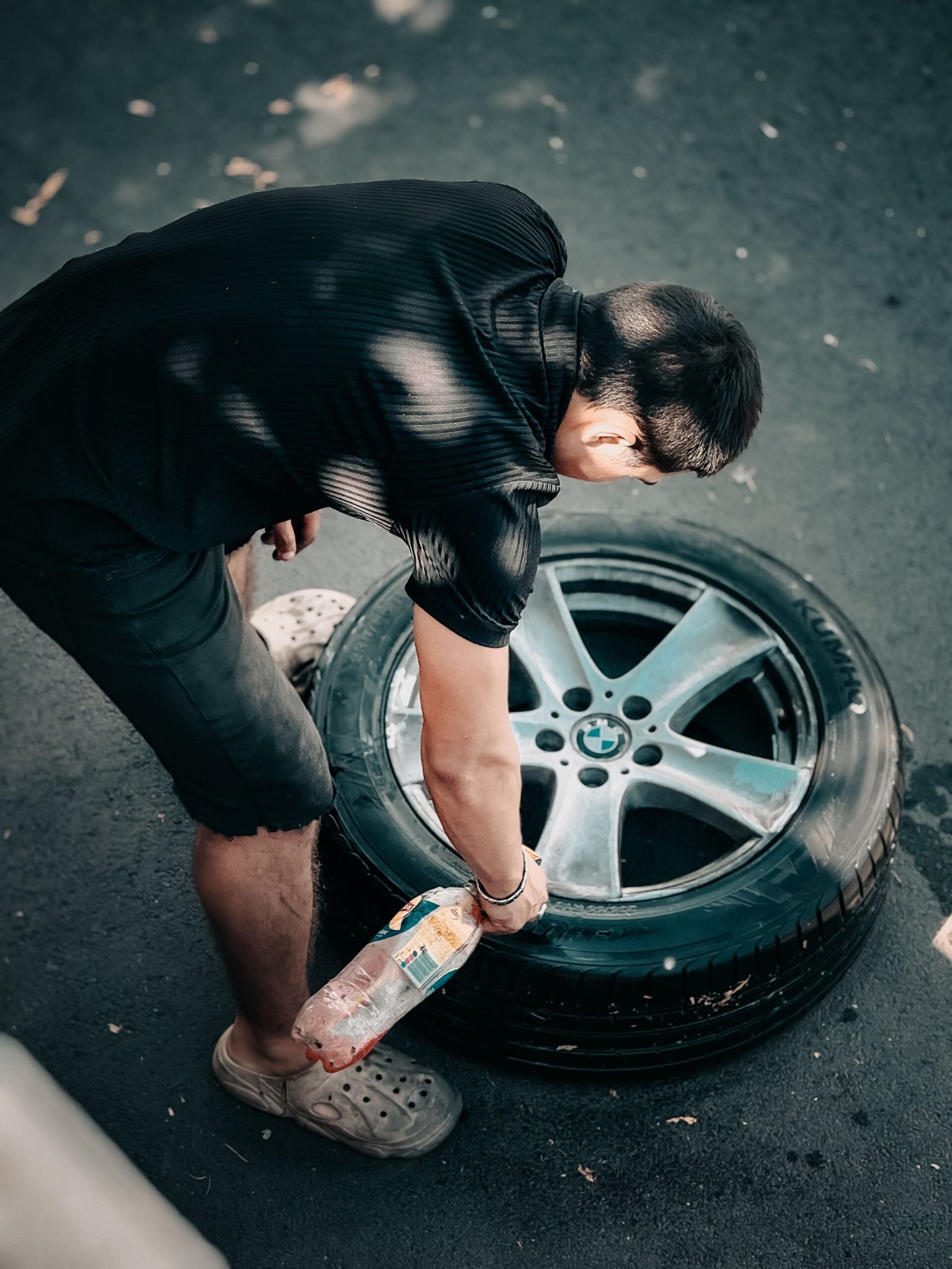
Your car’s tires are among the most important safety components on the vehicle. They are the only parts of the car that directly contact the road, which means their condition can affect braking, handling, fuel economy, comfort, and overall driving safety.
Many drivers don’t pay much attention to their tires until they experience a flat tire or notice that the tread is badly worn. However, regular tire maintenance can help you identify problems early and potentially extend tire life.
Incorrect tire pressure, uneven wear, damaged sidewalls, poor alignment, and neglected maintenance can all create unnecessary problems.
In this complete guide, we’ll explain how to maintain your car tires, how to identify warning signs, how often to check tire pressure, and what you should know before replacing your tires.
Why Tire Maintenance Is Important
Tires have to handle acceleration, braking, cornering, road imperfections, and changing weather conditions.
Poorly maintained tires can contribute to:
- Reduced grip
- Longer stopping distances
- Uneven handling
- Increased fuel consumption
- Premature tire wear
- Increased risk of tire failure
Even if the engine and brakes are in excellent condition, worn or incorrectly inflated tires can still affect how safely your car performs.
That’s why tire maintenance should be part of your regular vehicle-care routine.
1. Check Tire Pressure Regularly
Tire pressure is one of the easiest things to check and one of the most important.
Both underinflation and overinflation can affect how a vehicle behaves.
Underinflated tires may:
- Increase rolling resistance
- Reduce fuel efficiency
- Generate additional heat
- Wear unevenly
- Affect handling
Overinflated tires can also affect ride comfort and the tire’s contact with the road.
Always use the tire pressure recommended by your vehicle manufacturer rather than the maximum pressure printed on the tire sidewall.
Check tire pressure when the tires are cold for the most useful reading.
2. Don’t Judge Tire Pressure by Looking at Them
A tire can look normal even when its pressure is significantly different from the recommended level.
That’s why visual inspection alone isn’t enough.
Use a reliable tire-pressure gauge or a suitable tire-pressure monitoring system.
If your vehicle has a tire-pressure monitoring system, don’t ignore its warning.
Check the actual pressure and investigate if one tire repeatedly loses air.
3. Inspect the Tire Tread
The tread provides traction between the tire and road surface.
As tires wear, the tread becomes shallower.
Inspect the tread regularly and look for:
- Low tread depth
- Uneven wear
- Cracks
- Cuts
- Foreign objects
- Exposed internal material
If the tread is worn close to the manufacturer’s or legally specified limit, the tire should be replaced.
Don’t wait until the tire becomes completely smooth.
4. Watch for Uneven Tire Wear
Uneven wear is often a warning that something isn’t right.
You may notice more wear on:
- The inner edge
- The outer edge
- The center
- Specific sections of the tread
Different wear patterns can have different causes.
Potential causes include:
- Incorrect tire pressure
- Wheel alignment problems
- Suspension wear
- Wheel imbalance
- Driving habits
Replacing the tire without fixing the underlying problem may result in the new tire wearing unevenly as well.
5. Check for Sidewall Damage
The sidewall is particularly important because damage there can compromise the tire.
Inspect for:
- Bulges
- Deep cuts
- Cracks
- Punctures
- Severe abrasions
A bulge in the sidewall can indicate internal damage and should not be ignored.
If you see significant sidewall damage, have the tire inspected by a qualified tire professional before continuing normal driving.
6. Don’t Ignore Vibrations
If your steering wheel or vehicle vibrates while driving, tires and wheels should be among the things you check.
Possible causes include:
- Wheel imbalance
- Tire damage
- Uneven tire wear
- Bent wheel
- Alignment problems
- Suspension issues
If vibration appears suddenly, especially after hitting a pothole, get the vehicle inspected.
Driving continuously with a damaged wheel or tire can create additional problems.
7. Rotate Your Tires When Recommended
Tires don’t always wear evenly because different wheels can experience different loads and steering forces.
Tire rotation can help promote more even wear.
However, the correct rotation pattern depends on the vehicle and tire design.
Some tires are directional, while others may have different sizes or specifications for the front and rear axles.
Always follow the vehicle and tire manufacturer’s recommendations.
8. Keep Your Wheels Properly Aligned
Wheel alignment affects how your tires contact the road.
Poor alignment can cause:
- Uneven tire wear
- Steering pulling
- Steering wheel not being centered
- Reduced handling
- Faster tire wear
Alignment can be affected by potholes, road impacts, worn suspension components, and normal wear.
If your car starts pulling to one side or the steering wheel becomes noticeably off-center, consider having the alignment checked.
9. Balance Your Wheels
Wheel balancing helps distribute weight evenly around the wheel and tire assembly.
An imbalance can cause vibration, especially at certain speeds.
Common signs include:
- Steering wheel vibration
- Seat or floor vibration
- Uneven tire wear
A tire shop can check wheel balance and add appropriate balancing weights when needed.
10. Check Tires Before Long Trips
Before taking a road trip, spend a few minutes inspecting your tires.
Check:
- Tire pressure
- Tread condition
- Sidewalls
- Spare tire
- Tire repair equipment
- Wheel condition
If your vehicle has a spare tire, make sure it is properly inflated and accessible.
There’s little benefit in carrying a spare tire if you discover that it has been flat for months when you actually need it.
11. Understand the Tire Sidewall Information
The numbers and letters on a tire sidewall provide important information.
A typical tire size might look something like:
205/55 R16
These numbers indicate characteristics such as:
- Tire width
- Aspect ratio
- Construction type
- Wheel diameter
The tire also includes information related to load and speed ratings.
When replacing tires, use specifications appropriate for your vehicle.
Don’t choose a tire based only on appearance or price.
12. Don’t Mix Incompatible Tires
Using different tires on a vehicle can affect handling.
Ideally, tires should match appropriately according to the vehicle manufacturer’s requirements and the tire manufacturer’s recommendations.
Special care is needed with:
- Different tire sizes
- Different constructions
- Directional tires
- Performance ratings
- Vehicles with all-wheel drive
If you need to replace only one or two tires, ask a qualified tire professional about the appropriate setup for your vehicle.
13. Drive Carefully Over Potholes
Potholes can cause serious damage to tires and wheels.
A hard impact can result in:
- Sidewall damage
- Bent wheels
- Internal tire damage
- Alignment problems
- Suspension damage
When possible, slow down safely before rough sections of road.
If you hit a major pothole and notice a new vibration, pulling, or tire-pressure loss afterward, inspect the vehicle.
14. Don’t Overload Your Vehicle
Every tire has a maximum load rating.
Carrying excessive weight can put additional stress on the tires and other vehicle components.
Check the vehicle’s recommended maximum load and avoid exceeding it.
This is especially important before long trips when passengers and luggage can significantly increase vehicle weight.
15. Check the Age of Your Tires
Tires can age even when they have plenty of tread remaining.
Rubber compounds change over time due to environmental exposure, heat, sunlight, and storage conditions.
Look at the tire’s date information and consult the tire manufacturer or a qualified tire professional if you’re unsure about the age or condition of your tires.
Don’t rely on tread depth alone when deciding whether an old tire is safe.
How Weather Affects Tires
Temperature changes can influence tire pressure.
Cold weather can reduce pressure, while warmer temperatures can increase it.
This doesn’t mean you should routinely adjust pressure based solely on the weather. Instead, maintain the manufacturer’s recommended pressure and check it regularly.
Hot roads can also place additional stress on worn or damaged tires.
Before long drives in hot conditions, inspect your tires carefully.
When Should You Replace Your Tires?
Tires should be replaced when they reach the manufacturer’s recommended wear limit or develop serious damage.
Replacement may also be necessary if the tire has:
- Severe cracks
- Sidewall bulges
- Significant cuts
- Exposed internal material
- Serious uneven wear
- Age-related deterioration
If you’re unsure about the condition of a tire, have it professionally inspected.
A tire may look acceptable from a distance but have damage that isn’t obvious without a closer examination.
What to Do If You Get a Flat Tire
If you experience a flat tire while driving, remain calm.
Gradually reduce speed and move to a safe location away from traffic when possible.
Turn on your hazard lights and use the vehicle’s recommended tire-changing or repair procedure.
If you don’t have the correct equipment or you’re in an unsafe location, roadside assistance may be the safest option.
Don’t continue driving on a completely flat tire unless the vehicle and tire are specifically designed for such operation.
Common Tire Maintenance Mistakes
Many drivers make simple mistakes that reduce tire life.
Avoid:
- Ignoring tire-pressure warnings
- Using incorrect tire pressure
- Driving on visibly damaged tires
- Ignoring uneven tread wear
- Delaying alignment checks after major impacts
- Overloading the vehicle
- Forgetting the spare tire
- Buying tires based only on price
- Mixing unsuitable tire types
- Ignoring tire age and condition
Good tire care doesn’t have to be complicated. Consistency is more important than doing everything at once.
Simple Monthly Tire Checklist
Once a month, take a few minutes to check:
Tire Pressure:
Make sure all tires are at the manufacturer’s recommended pressure.
Tread:
Look for excessive or uneven wear.
Sidewalls:
Check for cuts, cracks, and bulges.
Leaks:
If one tire repeatedly loses pressure, investigate the cause.
Spare Tire:
Make sure it is usable and properly inflated.
Visual Condition:
Look for anything unusual before driving long distances.
Final Thoughts
Tire maintenance is one of the simplest ways to improve your vehicle’s safety and reliability.
Regularly check tire pressure, inspect tread and sidewalls, maintain proper alignment, rotate tires when recommended, and respond quickly to unusual vibrations or tire-pressure loss.
Don’t wait for a tire to fail before paying attention to it.
A few minutes of inspection can help identify problems early and potentially prevent an unexpected breakdown.
Remember that tires have a limited service life. Even if the tread looks acceptable, age, damage, and deterioration can affect their condition.
Take care of your tires, and they’ll help keep you safely connected to the road.