
Introduction
Knowing the things to check before buying a used car can help you avoid unexpected repair bills and make a more confident purchase. A vehicle may look excellent from the outside while hiding mechanical problems, accident damage, worn components, or paperwork issues.
Before buying, take your time and inspect the car systematically. Check its history, body, engine, tires, interior, electronics, documents, and driving performance. Most importantly, arrange an independent inspection when possible rather than relying only on the seller’s description.
1. Check the Vehicle History
A vehicle history report should be one of your first checks. Depending on the country and available records, it may reveal previous ownership, reported accidents, title or salvage information, mileage records, and other events.
The FTC recommends obtaining a vehicle history report before buying a used vehicle, while also emphasizing that a history report does not replace a mechanical inspection. (Consumer Advice)
Pay particular attention to:
- Accident or damage records
- Salvage or rebuilt status
- Previous ownership
- Recorded mileage
- Service or repair history
- Flood or water damage
If the seller refuses to provide the VIN, treat that as a reason to be cautious.
2. Verify the VIN
The Vehicle Identification Number, or VIN, should match the vehicle and its paperwork.
Check the VIN in multiple locations where applicable, such as the dashboard, door-jamb label, registration documents, and title or ownership records. Any mismatch should be investigated before you continue with the purchase.
For vehicles covered by the U.S. system, NHTSA’s VIN tools can provide useful vehicle information. Availability and databases vary by country, so buyers should also use their local vehicle-registration authority when appropriate.
3. Inspect the Exterior for Damage
Walk around the entire car in good lighting. Look closely rather than simply checking whether the paint appears shiny.
Check for:
- Different shades of paint
- Uneven panel gaps
- Scratches and dents
- Rust or corrosion
- Cracked glass
- Damaged lights
- Signs of previous body repairs
Open the doors, hood, and trunk and examine the edges and seams. Fresh paint or replacement panels are not automatically a problem, but they should be consistent with the vehicle’s history.
For more useful automotive inspection and ownership advice, explore our car tips and driving guides.
4. Examine the Tires and Wheels
Tires can tell you a lot about how a vehicle has been maintained.
Check whether the tread appears reasonably even across each tire. Uneven wear can sometimes indicate alignment, suspension, tire-pressure, or other issues.
Also inspect for:
- Cracks or bulges
- Excessive wear
- Uneven tread
- Damaged wheels
- Different tire brands or sizes
- Missing or damaged wheel components
Tire condition varies by vehicle and usage, so do not assume that a particular tread depth or replacement interval applies to every model. Check the manufacturer’s recommendations and local safety requirements.
5. Check the Engine and Fluids
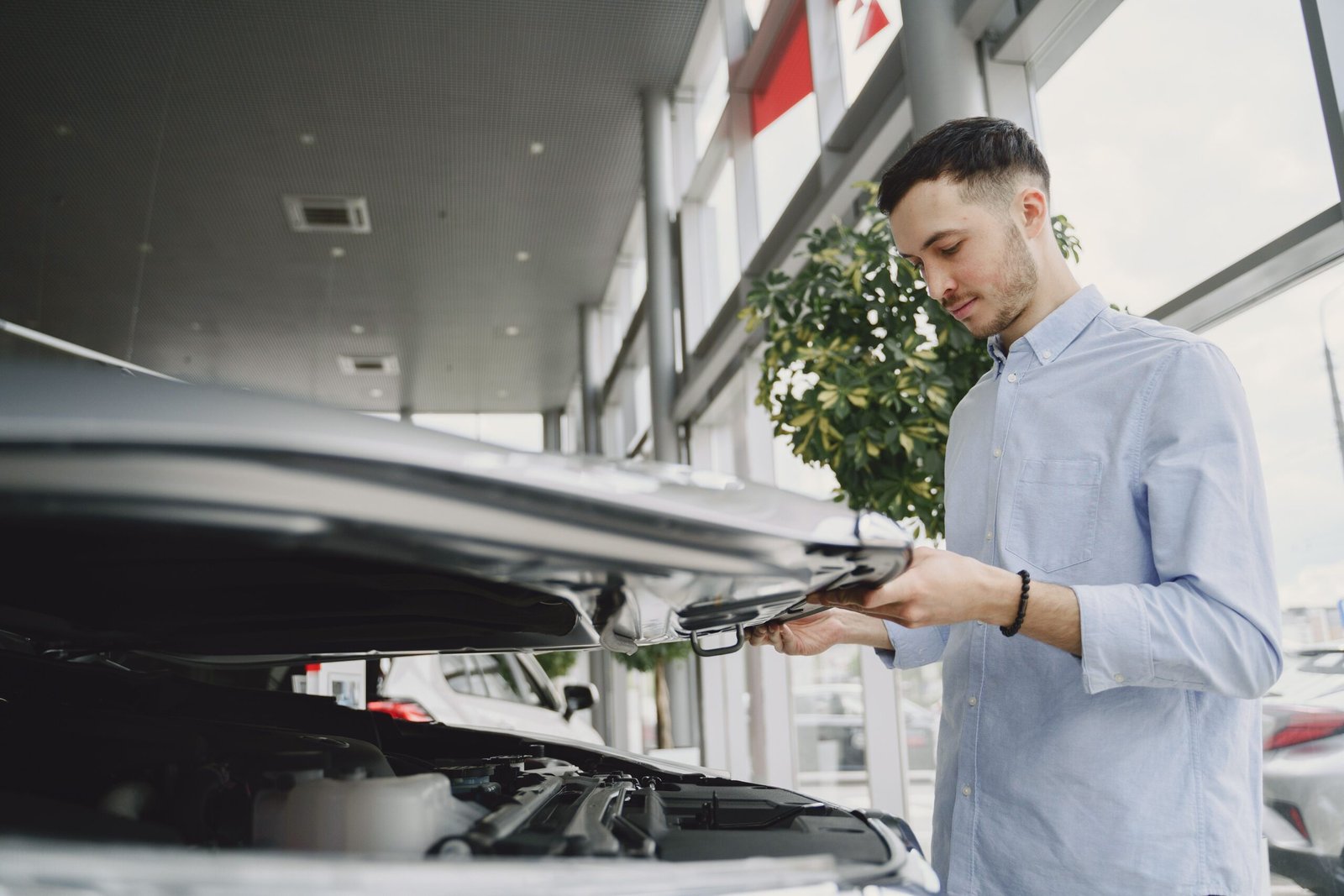
Inspect the engine bay before purchasing. Look for obvious oil or coolant leaks, damaged components, loose connections, and excessive corrosion.
If possible, inspect fluid levels and condition according to the manufacturer’s procedures. Warning signs can include:
- Strong burning smells
- Fresh fluid around the engine
- Unusual noises
- Heavy smoke
- Warning lights
- Signs of poor previous maintenance
Do not judge an engine solely by how clean the engine bay looks. A professional inspection can provide much more useful information.
If you want to understand common vehicle faults, our car troubleshooting guide covers problems that drivers commonly encounter.
6. Test the Brakes and Suspension
During the test drive, pay attention to how the vehicle behaves when braking and going over normal road surfaces.
Watch for unusual vibration, pulling to one side, grinding sounds, excessive bouncing, or other behavior that feels abnormal.
Brake and suspension components can wear at different rates depending on the vehicle, driving conditions, and maintenance history. If something feels wrong, have a qualified mechanic inspect it before buying.
7. Test Every Important Feature
Do not assume every electrical feature works simply because the car looks well maintained.
Before completing the purchase, test:
- Headlights and indicators
- Brake lights
- Air conditioning and heating
- Power windows
- Central locking
- Mirrors
- Wipers and washers
- Infotainment system
- Parking sensors or cameras
- Dashboard displays
Also check that there are no unexplained warning lights after starting the vehicle.
If a feature is important to you, test it yourself rather than accepting the seller’s statement that it works.
8. Take a Proper Test Drive
A test drive is one of the most important things to check before buying a used car.
Start the vehicle from cold if possible and listen for unusual noises. During the drive, evaluate steering, acceleration, braking, transmission behavior, suspension, and general vehicle stability.
Try to experience different situations when safe and legal, such as:
- Stop-and-go traffic
- Normal acceleration
- Moderate braking
- Turns
- Reversing
- Different road surfaces
Do not rush the test drive. A vehicle that feels good for two minutes may reveal problems after longer operation.
9. Get an Independent Mechanical Inspection
A professional pre-purchase inspection is one of the best ways to reduce the risk of buying a vehicle with hidden mechanical problems.
The FTC recommends an independent inspection even when a vehicle has been inspected or certified by a dealer. (Consumer Advice)
Choose a mechanic who is independent from the seller. Ask for a written report covering significant issues and likely repair costs.
If the seller refuses to allow an independent inspection without a reasonable explanation, consider looking at another vehicle.
For ongoing ownership, you can also review our car maintenance guide to understand the importance of routine vehicle care.
10. Check the Paperwork, Recalls, and Final Price
Before paying, make sure the ownership documents, VIN, and seller information are consistent.
Depending on your location, you may need to verify:
- Registration or title
- Ownership history
- VIN
- Inspection certificates
- Outstanding loans or liens
- Insurance requirements
- Transfer documents
You should also check for outstanding safety recalls. NHTSA provides a recall lookup service that allows eligible vehicles to be checked using the VIN. (NHTSA)
Finally, compare the asking price with similar vehicles and account for repairs that may be needed immediately.
Quick Used Car Inspection Checklist
Before buying, make sure you have checked:
- Vehicle history
- VIN
- Exterior condition
- Tires and wheels
- Engine and fluids
- Brakes and suspension
- Electrical features
- Test-drive performance
- Independent mechanical inspection
- Paperwork, recalls, and final price
A useful approach is to write down problems as you inspect the vehicle. This prevents small issues from being forgotten and gives you evidence when discussing the price.
Frequently Asked Questions
What should I check first when buying a used car?
Start with the VIN and vehicle history, then inspect the physical condition. After that, arrange a test drive and independent mechanical inspection before making a final decision.
How do I know if a used car has been in an accident?
Check the vehicle history report for recorded damage and inspect the body for mismatched paint, uneven panel gaps, replaced parts, or inconsistent repairs. A professional inspection can identify additional signs.
Should I buy a used car without a mechanic inspection?
It is generally better to have an independent mechanic inspect the vehicle before purchasing. A visual inspection and history report cannot identify every mechanical problem.
Is high mileage always a reason to avoid a used car?
No. Mileage should be considered together with maintenance history, age, condition, previous use, and documented repairs. A well-maintained higher-mileage vehicle may be a better choice than a poorly maintained lower-mileage car.
What are the biggest red flags when buying a used car?
Major warning signs include VIN discrepancies, missing ownership documents, unexplained accident damage, severe rust, warning lights, suspicious mileage records, significant mechanical problems, and sellers who refuse reasonable inspections.
Conclusion
The most important things to check before buying a used car include its history, VIN, body condition, tires, engine, brakes, electronics, test-drive performance, paperwork, and mechanical condition.
Do not let a low price or attractive appearance pressure you into making a quick decision. Take your time, verify the vehicle’s history, arrange an independent inspection, and make sure the final price reflects the car’s actual condition.